
💥 Why Nebraska Is A Hidden Gem For Lien Investors
When most people think of tax lien investing, they focus on big-name states like Florida or Illinois. But nebraska tax lien sale quietly offers one of the most investor-friendly systems in the country—with high return caps, predictable auction schedules, and legally enforceable interest rights. What makes it different? Simplicity and structure.
Nebraska is a tax lien certificate state, not a tax deed state. That means you’re not buying the property—you’re buying a lien against it. The property owner has time to redeem it, and if they do, you walk away with interest. If they don’t, you can begin foreclosure after a waiting period and potentially take ownership of the property.
But here’s where it gets interesting: Nebraska has one of the longest redemption periods (3 years), yet it enforces 14% annual interest, paid to the investor upon redemption. That’s a serious return—especially in a stable Midwest market with low volatility.
📜 How Nebraska’s Tax Lien System Works
Let’s say a homeowner in Nebraska doesn’t pay their property taxes. After notice, the county issues a tax sale certificate. At that point, investors can bid at the annual public auction (usually held in March).
But Nebraska uses a premium bidding system. Instead of bidding down the interest rate like in Arizona, you’re bidding up the premium you’re willing to pay above the taxes owed. The investor who agrees to the highest overbid wins the certificate.
That means two things:
-
You might earn less if you overpay up front.
-
You need to understand the property’s true value before bidding.
Nebraska gives the property owner three years to redeem the certificate. During that time, they must pay back all delinquent taxes, penalties, and your 14% interest. If they don’t, you can begin foreclosure proceedings to take ownership.
📈 Graph: Nebraska Tax Certificate Timeline
Let’s visualize the timeline from sale to foreclosure:
Nebraska Tax Lien Certificate Timeline
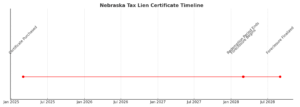
The timeline above shows exactly what investors need to prepare for in a nebraska tax lien sale—a 3-year wait before redemption expires, and several months after that for foreclosure to complete. Now continuing with the article.
🧠 Why Many Investors Fail In Nebraska
They treat it like a quick flip. It’s not.
They overbid the premium and lose profit on redemption.
They don’t understand the 3-year holding requirement.
They assume foreclosure is automatic—it’s not.
If you don’t know the legal process for perfecting a tax certificate into property ownership, you’re just buying a promissory note that may never pay off. That’s why Nebraska favors smart, long-term investors, not rookies looking for a fast ROI.
Many counties allow you to assign certificates, which means you could resell your lien to another investor before foreclosure. But that only works if the property and rate are desirable. Bad certificates sit and rot.
🏛️ Nebraska Counties With Lien Sales
Each of Nebraska’s 93 counties holds its own annual sale. Some use third-party online platforms, but many still conduct live auctions at the courthouse. You’ll need to:
-
Register in advance
-
Bring certified funds
-
Know how premium bidding works in that county
Some popular counties for investors include:
-
Douglas County (Omaha)
-
Lancaster County (Lincoln)
-
Sarpy County (Bellevue/Papillion)
Smaller rural counties may have fewer bidders—but also less competition for high-interest parcels.
💳 Chasing Tax Deeds While Drowning In Debt?
You’re not alone. Tax lien investors often have massive credit card bills, old tax debt, or business loans stacking interest while chasing properties. But here’s the good news: You may qualify for legal debt relief that wipes it out.
CuraDebt’s expert team negotiates real settlements — sometimes pennies on the dollar — while you focus on flipping deeds and building assets.
👉 See If You Qualify in 30 Seconds (Free & Confidential)
🧨 Don’t let IRS debt or credit collectors sabotage your real estate game.
📌 Important Legal Note
Even though Nebraska pays 14% interest, the clock only starts once per year at the time the tax certificate is issued. That means you can’t buy mid-year and expect pro-rated interest. It’s a fixed annual cycle, so timing matters.
Also: if the taxpayer pays directly to the treasurer, the county cuts your check. But if they redeem late and fees are involved, you may have to enforce your rights legally.
Again—know the difference between tax lien ownership and real property ownership. They’re not the same thing.
🔐 Hidden Risks
Nebraska has relatively clean titles—but that doesn’t mean every property is safe. You still need to check for:
-
Environmental issues (especially in agricultural zones)
-
Floodplain restrictions
-
Rural property with no access or zoning conflicts
-
Parcels that are “landlocked” or legally unbuildable
Just because a lien is available doesn’t mean it’s valuable.
🧨 Final Warning
Don’t enter a nebraska tax lien sale thinking it’s like flipping a house. It’s not.
You’re buying a long-term debt instrument that may or may not become real property. But if it does? And you picked your lien correctly? You could end up with property worth 5x what you paid—or collect three years of double-digit interest while the owner pays your return.
👉 Start here if you’re trying to decode what the IRS has sent you: Has the IRS Sent You a Notice? 👈